
The Digital Divide: Are School Phone Bans Passing the Test?
While phone-free policies are sweeping the nation to curb distraction, early data suggests a "delayed return on investment" where initial spikes in suspensions and student pushback only trade off for modest academic gains once enforcement finally stabilizes.
BRYNN LEE
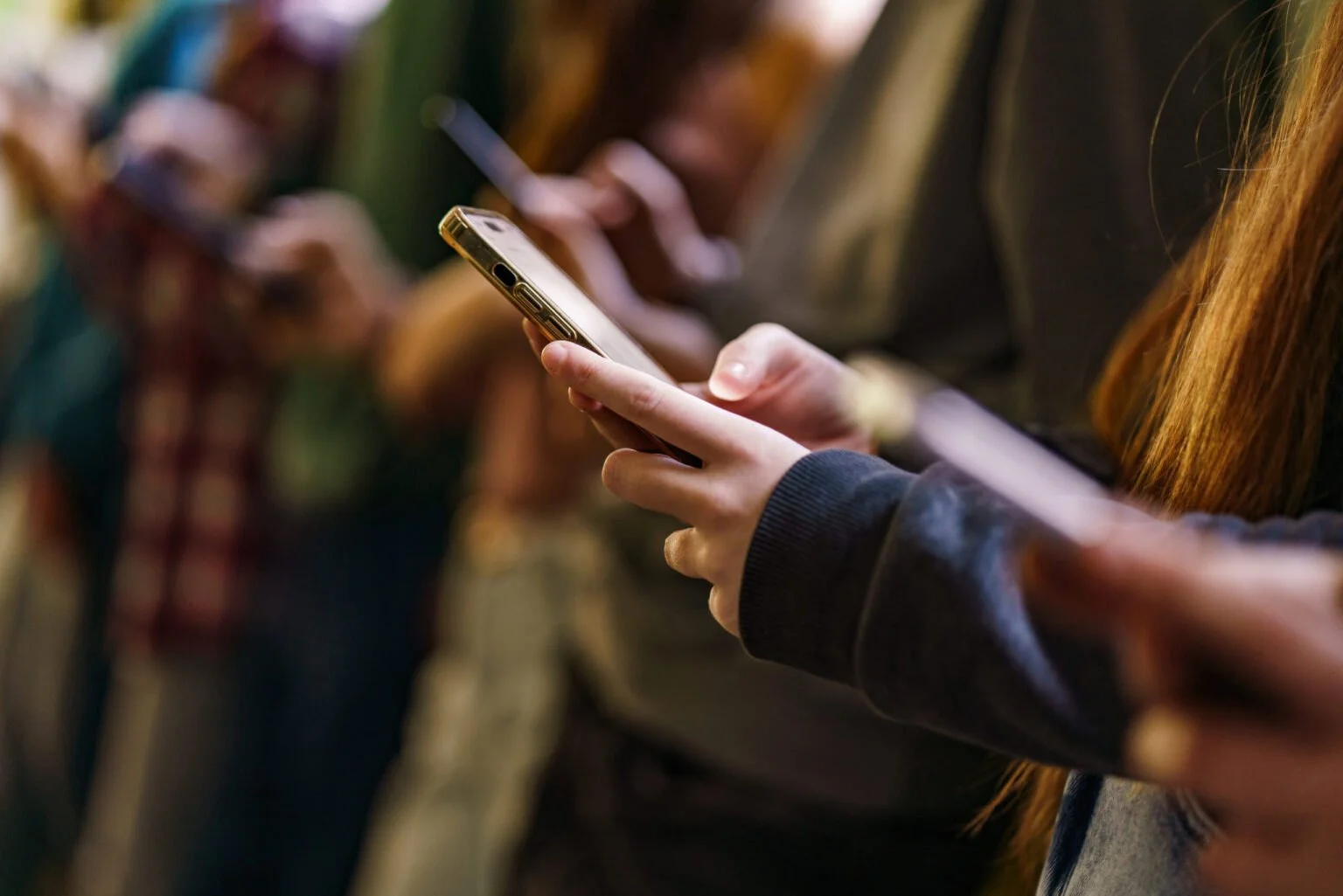
Teenager with phone in classroom, StockPlanets - iStock 2025
For years, teachers have been saying the same thing: phones are killing the classroom. Students scroll during lessons, text during tests, and check social media in the middle of group work. The disruption is constant and the problem is well documented. So schools started banning phones. Then states got involved. Now the question is whether any of it is making a real difference.
The short answer is: maybe, but it depends a lot on how the ban is run and how long it's been in place.
Nationwide employment
Twenty-six states now have laws or policies banning or restricting cellphone use in K-12 classrooms, and 22 of those were enacted in 2025 alone. That's an enormous amount of policy change in a very short window. Florida moved first, becoming the first state in 2023 to enact a far-reaching law prohibiting students from using phones, earbuds, smartwatches, and headphones during instructional time, except when a teacher explicitly allows it for educational purposes.
Public opinion is broadly supportive. A 2025 Pew Research Center survey found growing support for phone restrictions, with backers citing fewer distractions and better social skills as the main reasons. Furthermore, a 2024 NEA survey found 90 percent of teachers support banning phones during instructional time, and 75 percent favor bell-to-bell bans.
But teachers wanting phones gone and phones being gone are two different things. And even when bans go into effect, the outcomes haven't been straightforward.
What Florida's Data Shows
Florida gives researchers the best data so far, because it was first and because the rollout was statewide. A study by David Figlio and Umut Özek at the National Bureau of Economic Research followed more than 130,000 students in one of Florida's largest urban districts across three school years.
The first year did not go smoothly. Suspensions rose by 12 percent, and in-school suspensions went up by about 20 percent in year one, with the biggest increases among Black students, male students, and middle and high schoolers. Schools were enforcing a new rule, students were pushing back, and the disciplinary response was uneven.
But by year two, the picture shifted. Disciplinary rates fell back toward pre-ban levels, and test scores increased significantly in the second year, rising about 1.1 percentile points on average. The gains were larger for male students, Black students, and middle and high schoolers. Attendance also improved, and researchers estimated that better attendance may account for roughly half of the test score gains.
The overall improvement is modest. But the study found the biggest gains in schools that had the highest phone usage before the ban, suggesting the restrictions did have an effect.
The Enforcement Problem
The Florida data points to something that researchers keep flagging: enforcement matters as much as the policy itself. A ban that exists on paper but isn't consistently applied doesn't produce the same results as one schools actually follow through on.
Psychologist Angela Duckworth, leading the Phones in Focus research project, put it plainly after surveying teachers across the country: the stricter the policy, the happier the teacher and the less likely students are to be using phones when they shouldn't be.
That sounds obvious. But in practice, enforcement is where most bans start to fall apart. Teachers already carry enormous workloads. Adding "confiscate phones" to the job description creates conflict, especially with older students. Florida's first-year suspension data shows what can happen when enforcement becomes punitive before schools have figured out how to roll the policy out thoughtfully.
What Teachers and Students Think
There's a real gap between how adults and students feel about this.
In a RAND survey, 86 percent of principals in schools with phone restrictions reported positive outcomes, including improved school climate, less cyberbullying, and less inappropriate use. Teachers largely agree. Students are more skeptical. While six in ten students said they support some phone restrictions during class because phones are distracting, only one in ten supported a bell-to-bell ban. The main pushback from students and some parents is about emergencies. Being unreachable for an entire school day is a real concern for families, particularly those with younger kids or students with medical needs. Most state laws carve out exceptions for this, but those exceptions vary and enforcement of them adds another layer of complexity.
What the Research Still Can't Confirm
Mental health is the other major argument behind phone bans. The logic is that less phone access during the day means less exposure to social media, which means better mental health outcomes. The link between heavy social media use and depression in teenagers is well established. But whether banning phones at school specifically moves the needle on mental health is harder to show.
A review of 22 studies on phone bans found that the relationship between bans and cyberbullying was actually mixed. One study found cyberbullying increased after a ban, possibly because punitive enforcement created a negative school climate. The broader mental health question remains largely unanswered by the current data.
Researchers have also noted that even with phone bans in place, students aren't fully protected from the effects of technology use; the habits and patterns built outside of school don't disappear at the classroom door.
The Bottom Line
Phone bans are moving faster than the research can keep up with. Most of the current evidence comes from early rollouts, and the studies show that the first year can actually make things worse before they get better.
What the data does suggest is that bans can work, but the outcome depends heavily on how the policy is enforced, whether schools give it time to settle in, and whether the goal is clearly defined. A ban aimed at improving test scores looks different from one aimed at improving school culture, and both look different from one aimed at protecting student mental health.
Right now, schools are mostly running these policies on faith and early indicators. The clearer answers will take a few more years of data to arrive.