
Food Insecurity in Schools: How Trump's Cuts to Food Programs Are Affecting Students Nationwide
The growing crisis of childhood hunger evolves through reduction of funds for school nutrition
BRYNN LEE
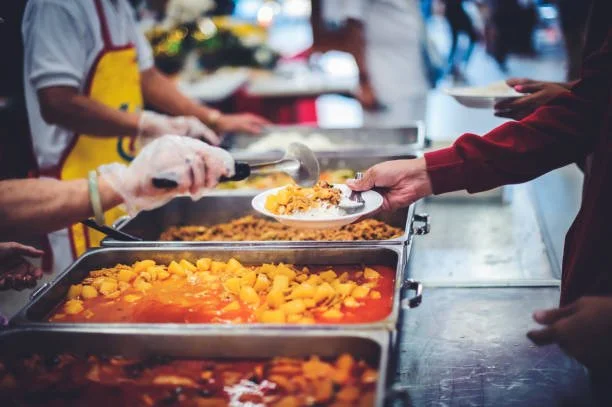
Volunteers help to draw food for the poor who are waiting to receive food in hunger, kuarmungadd, March 1st, 2023
Food insecurity among America's schoolchildren has reached alarming levels. Approximately 14 million children lived in households experiencing food insecurity in 2024, representing a crisis that affects roughly one in five children across the nation. The impact of hunger on students is far-reaching and devastating. Research shows that food insecurity in kindergarten was associated with poor reading performance and impaired social skills in later grades. Children facing food insecurity experience a range of challenges from difficulty concentrating, and declining academic performance to physical complaints like headaches and stomachaches, as well as heightened anxiety and lowered self-esteem.
Since returning to office in January 2025, the Trump administration has implemented sweeping cuts to federal programs that support school nutrition, creating what advocates describe as a cascade of harmful effects for vulnerable students.
Local Food for Schools Cooperative Agreement Program: $660 million cut
Local Food Purchase Assistance Cooperative Agreement Program: $420 million cut
The USDA told recipients that the programs "no longer effectuate the goals of the agency". This elimination came despite the programs having already spent over $1 billion on local foods and a planned expansion with an additional $1.13 billion.
These cuts have immediate, tangible consequences. Vickie Dunaway, who supervises a Tennessee school system's food services, said the federal cuts mean "going backwards" on purchasing healthier foods, noting that "purchasing local, minimally processed food is way more expensive than buying from a distributor".
In Arkansas, Amanda West, child nutrition director for the Monticello School District, said "$50,000 from USDA's local food program was such a help" for the 1,600-student district. The district had used grant money to purchase locally grown ground beef, but now faces uncertainty with grocery prices 30-40% higher than they were a few years ago.
Additionally, the Trump administration's FY 2026 budget proposal seeks to eliminate funding for the 21st Century Community Learning Centers initiative, the only federal funding source dedicated exclusively to supporting local afterschool, before-school, and summer learning programs, which currently funds more than 10,000 programs serving nearly 1.4 million children nationwide.
This cut would devastate afterschool and summer nutrition programs, as these learning programs provide critical platforms for serving afterschool suppers, snacks, and summer meals while keeping children safe and engaged when school is out.
Currently, schools where 25% of students are directly certified for free meals through programs like SNAP or Medicaid can participate in CEP. Today, roughly 20 million children benefit from the community eligibility provision, representing about 40% of the nation's public school students.
Congressional Republicans have proposed raising the threshold to 60%, which would be devastating. The proposal would strip away 24,000 schools' ability to participate in CEP, impacting over 12 million children, according to the Food Research & Action Center. Some educators fear that the provision could be outright eliminated, which is a proposal in Project 2025, the conservative policy agenda that has influenced several Trump administration initiatives.
School meal programs were already operating on razor-thin margins before these cuts. In a School Nutrition Association survey, only 20.5% of school meal program directors said the reimbursement rate, up to $4.43 per meal, is enough to cover the cost of producing a lunch.
In a recent association survey of more than 1,390 school meal directors, more than 90% reported serious or moderate concern over the financial sustainability of their school meal programs three years from now.
The rising costs are staggering. Schools face challenges including:
Food costs higher than a few years ago
Increased labor expenses
Equipment costs rising sharply
Growing unpaid meal debt
The school meal cuts come amid a broader crisis of food insecurity in America. This spike was likely largely driven by inflation and the rollback of critical COVID-19 pandemic relief efforts that provided temporary boosts to SNAP benefits, allowed schools to offer school meals to all their students at no charge, and expanded the Child Tax Credit. The geographic distribution of food insecurity is uneven. Households in the Southern region continued to experience higher rates of food insecurity than any other U.S. region, with 14.7 percent of households experiencing food insecurity in 2023. Additionally, urban and rural areas face higher rates than suburban communities.
Despite the financial pressures, nutrition directors emphasize their commitment to students. Some districts are considering raising meal prices, a move they typically try to avoid. Others are looking for creative solutions, though options are limited with rising costs and reduced funding.
Anti-hunger advocates are calling for urgent action to reverse these cuts and strengthen school nutrition programs. The Food Research & Action Center and more than 1,400 organizations have urged Congress to strengthen SNAP benefits and protect the program from cuts. School Nutrition Association President Shannon Gleave said in a statement that changes to CEP "would cause millions of children to lose access to free school meals at a time when working families are struggling with rising food costs" and that school cafeteria staff "would be saddled with time-consuming and costly paperwork created by new government inefficiencies".
The Trump administration's cuts to school food programs come at a time when childhood hunger is already at crisis levels. With 14 million children living in food-insecure households, school meals often represent the most reliable source of nutrition for vulnerable students. The elimination of local food programs, proposed gutting of the Community Eligibility Provision, and massive cuts to SNAP and Medicaid create a perfect storm that threatens to push millions more children into hunger.
The question now is whether policymakers will heed the warnings from educators, nutrition professionals, and anti-hunger advocates, or whether America's most vulnerable students will bear the cost of budget cuts.
